

Introduction
M&A due diligence is the structured process of investigating a target company's financial, legal, operational, and strategic position before a transaction closes — and in hotel acquisitions, it carries a level of complexity that standard M&A frameworks weren't designed for.
This guide is written specifically for hotel investors, owners, developers, and private equity groups evaluating acquisitions across the Americas — the U.S., Mexico, the Caribbean, and Latin America. Unlike a standard business acquisition, a hotel deal involves four overlapping layers of risk:
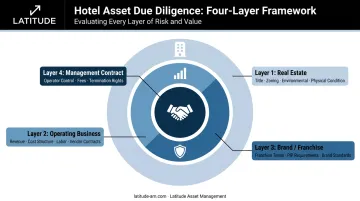
- Real estate — physical asset condition, title, zoning, and environmental exposure
- Operating business — revenue quality, labor structure, expense trends, and management performance
- Brand or franchise relationships — PIP obligations, fee structures, termination rights, and renewal conditions
- Third-party management contracts — assignment restrictions, termination costs, and incentive fee triggers
Each layer can hide liabilities that only surface if you know where to look.
According to CoStar/STR data, U.S. hotel transaction volume reached $21 billion in 2024 — a 15% decline from 2023, yet price per key increased as higher-quality assets traded. That dynamic raises the stakes: buyers are paying premium prices for assets where the margin for error is thin.
Key Takeaways
- Due diligence validates whether a hotel's value on paper matches reality — it's not a legal formality
- Hotel M&A due diligence spans financial performance, brand agreements, management contracts, physical condition, and market positioning
- Cross-border deals in the Americas require jurisdiction-specific legal, labor, and regulatory review
- Overlooking management contract change-of-control clauses and PIP obligations are among the costliest mistakes buyers make
- A hospitality asset manager's operational and brand expertise is critical to interpreting due diligence findings accurately
What Is Due Diligence in M&A?
Due diligence is the pre-transaction process of verifying, investigating, and auditing all material facts about a target business to confirm its value and identify potential liabilities before a deal closes.
The process gives the buyer confidence that what they're acquiring matches the financial, legal, and operational picture presented — and surface hidden risks that could affect pricing, deal terms, or the decision to proceed at all.
Two distinctions define where due diligence fits in any transaction:
- Due diligence vs. negotiation: Negotiation sets the terms of a deal. Due diligence validates whether those terms are justified by the underlying facts.
- Due diligence vs. post-merger integration: Integration planning begins after due diligence findings are reviewed. The two are sequential, not interchangeable.
In hotel transactions, both distinctions matter. Buyers sometimes compress due diligence into a formality near closing. It should be the analytical foundation on which deal structure and price are built — not a final hurdle.
Why Due Diligence Is Critical in Hotel M&A Transactions
The Four-Layer Complexity Problem
A hotel acquisition involves four distinct layers of diligence, each carrying its own risk profile:
- Real estate: Title, zoning, environmental, and physical condition
- Operating business: Revenue performance, cost structure, labor obligations, vendor contracts
- Brand or franchise relationship: Franchise agreement terms, PIP requirements, brand standards compliance
- Management contract: Operator control, fee structures, termination rights, change-of-control clauses
Most standard M&A due diligence frameworks address the first two adequately. The third and fourth are where hotel buyers most frequently get hurt.
What's at Stake Without Rigorous Due Diligence
Without thorough review, buyers can inherit:
- Undisclosed liabilities or pending litigation
- Long-term management contracts that transfer with the asset and limit buyer control
- Expiring brand licenses or imminent PIP obligations requiring immediate post-close capital
- Market positioning that looks strong on trailing revenue but masks deteriorating market share
- Deferred maintenance costs that weren't reflected in the purchase price
The Americas Cross-Border Layer
Acquisitions in Mexico, the Caribbean, Colombia, and broader Latin America add complexity that U.S.-centric due diligence frameworks don't address. Key considerations include:
- Mexico's restricted zone regime: A zone extending 100 km from borders and 50 km from coasts governs how foreign-involved entities may hold nonresidential property, with SRE notification required within 60 business days
- FCPA compliance: The DOJ and SEC expect thorough, risk-based anti-corruption diligence on government permits, concessions, agents, and state-owned counterparties
- Labor successor liability: In Mexico, the original employer remains jointly liable for pre-transfer labor obligations for six months following an employer substitution
- Colombia and Caribbean: Foreign investment frameworks, exchange controls, and local operating requirements vary meaningfully by jurisdiction and require country-specific counsel
Each of these layers requires advisors with genuine on-the-ground presence — not just familiarity with the jurisdictions, but established relationships with local counsel, regulators, and operators. That depth of regional embeddedness is what separates adequate diligence from diligence that actually protects buyer value.
How the Hotel M&A Due Diligence Process Works
Hotel due diligence follows a structured sequence: define scope, assemble the team, collect and review data through a virtual data room (VDR), surface risks, and deliver a formal report that informs deal structure, valuation, and negotiation. Each step builds directly on the last — skipping or rushing any one of them is where deals go sideways.
Step 1: Define Scope and Assemble the Team
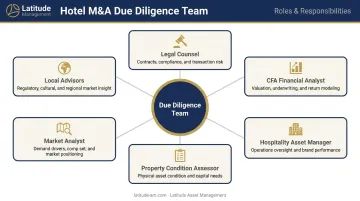
Scope is determined by the deal's size, geography, asset type, and known risk factors. A typical hotel due diligence team covers:
- Legal counsel covering corporate structure, title, contracts, and regulatory compliance
- A CFA-level financial analyst for underwriting, performance analysis, and scenario modeling
- A hospitality asset manager to assess operations, evaluate brand/operator fit, and interpret management contracts
- A property condition assessor conducting physical inspection per ASTM E2018-24 standards
- A market analyst reviewing demand drivers, competitive set benchmarking, and forward projections
- Local advisors with jurisdiction-specific knowledge of regulatory, labor, and investment requirements
At Latitude Asset Management, Javier Revelo (CFA) leads financial analysis across acquisitions and portfolio strategy, while Anthony Del Gaudio's 35+ years at Hyatt, Loews, and IHG brings firsthand brand and operator knowledge that shapes how contract and performance findings are interpreted.
Step 2: Request, Organize, and Review Key Documents
The buyer submits a formal due diligence request list. Core document categories include:
- Organizational and ownership records
- Title, survey, zoning, and property records
- Financial statements, tax filings, and operating statistics
- Franchise agreements, management contracts, and PIP correspondence
- Vendor and material contracts
- Employee records, benefits, union agreements, and claims
- Licenses, permits, environmental assessments, and insurance
- Litigation history and regulatory correspondence
The quality and completeness of seller disclosures directly affects timeline. Always cross-verify seller-provided financials against tax filings, operator reports, and brand performance data — never accept them at face value.
Step 3: Analyze Findings, Identify Red Flags, and Report
Each workstream reviews its area, documents findings, and flags risks that could affect valuation or deal viability. The final due diligence report:
- Summarizes key risks and open questions by workstream
- Identifies items requiring price adjustment, representations and warranties, or escrow holdbacks
- Feeds directly into final negotiation, deal structuring, and post-close integration planning
Key Areas of Focus in Hotel M&A Due Diligence
Financial and Performance Analysis
Hotel financial due diligence goes beyond reviewing income statements. Buyers should analyze:
- RevPAR, ADR, and occupancy trends across multiple years to identify patterns that trailing 12-month snapshots obscure
- EBITDA and NOI margins relative to market benchmarks and property type
- Revenue concentration risk — heavy reliance on one corporate account, group segment, or seasonal demand pattern creates exposure that blended averages conceal
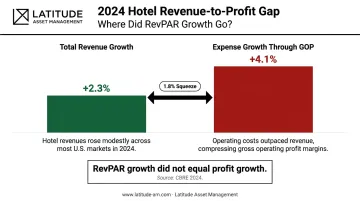
One critical data point: CBRE reported that in 2024, expenses through GOP rose 4.1% while total revenue grew only 2.3% across most U.S. hotel property types. RevPAR growth did not translate to equivalent profit growth. The gap is where acquisitions get mispriced. Buyers who underwrite to revenue trends without stress-testing cost conversion will systematically overpay.
The implication for due diligence: normalize revenue and expenses. Benchmark gross operating profit margins at the property level rather than applying class-level averages that may not reflect the asset's actual cost structure.
Brand, Franchise, and Management Contract Review
These are frequently the most consequential documents in a hotel transaction — and the most commonly underanalyzed.
Key review items:
- Change-of-control clauses that could trigger renegotiation, operator consent requirements, or termination upon sale
- Franchise agreement terms: typically 10–15 years, with transfer approval requirements, liquidated damages on early termination, and brand standards obligations
- Third-party management agreements: initial terms commonly run 5–10 years; verify termination-at-will provisions, performance tests, notice periods, and fees
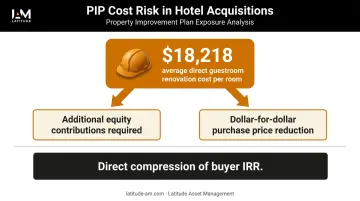
- PIP obligations: brand-mandated Property Improvement Plans attached to franchise continuation can represent significant immediate post-close capital requirements
HVS research documented an average direct guestroom renovation cost of $18,218 per room — and noted that underestimated PIP costs can force additional equity contributions or dollar-for-dollar price reductions, directly compressing buyer IRRs.
What contract language says and how brands enforce it in practice are often two different things. Advisors with direct brand-side and ownership-side experience — across systems like Hyatt, Loews, IHG, and Óptima Hoteles de México — can identify enforcement patterns and negotiating leverage that a pure legal read will miss. Latitude Asset Management's team brings exactly that cross-perspective experience to franchise and management contract review.
Legal and Regulatory Compliance
Legal due diligence covers:
- Corporate structure and ownership documentation
- Pending litigation and regulatory proceedings
- Permit and operating license status (liquor licenses, health permits, zoning approvals)
- Labor law compliance, including union agreements and accrued benefit obligations
- Environmental assessments
- Data privacy compliance
Cross-border transactions expand this checklist considerably. FCPA review (covering government permits, agents, and state-owned counterparties), foreign investment registration requirements, and local zoning or concession validation each require jurisdiction-specific expertise — and gaps here can create post-close liabilities that restructuring alone cannot resolve.
Physical Asset and Capital Expenditure Assessment
A Property Condition Assessment (PCA) conducted per ASTM E2018-24 standards provides the baseline for understanding the true cost of ownership. The PCA should establish:
- Immediate repair costs (including life-safety issues)
- Future capital requirements across the ownership period
- Replacement reserve adequacy
- Conversion or repositioning costs if applicable
The PCA must be reconciled against the brand PIP to avoid double-counting and identify scope gaps. Failure to accurately account for these costs at acquisition is a leading cause of value erosion — because unlike revenue assumptions, capex obligations don't respond to market conditions.
Market and Competitive Positioning
Historical RevPAR can be misleading. A property may report stable revenue while losing market share, benefiting from a temporary demand spike, or operating in a competitive set that has shifted as new supply entered the submarket.
Demand analysis should examine:
- Segment mix: commercial, group/meeting, and leisure travel each have distinct pricing, seasonality, and growth dynamics
- Competitive set relevance — is the comp set economically current, or does it need to be redefined?
- Proximity to demand drivers and supply pipeline trends
- Forward booking pace and any account concentration behind blended STR indexes
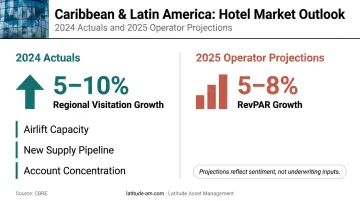
For Caribbean and Latin American markets, CBRE reported that regional visitation increased 5–10% in 2024, with operators projecting 5–8% RevPAR growth for 2025. Those projections reflect operator sentiment, not underwriting inputs. Buyers should trace the demand drivers behind the forecasts — airlift capacity, new supply timelines, account concentration — before embedding growth assumptions into acquisition models.
Common Mistakes in Hotel M&A Due Diligence
Three patterns consistently create post-closing problems for hotel acquirers — and all three are avoidable with the right diligence scope and timeline.
1. Treating Due Diligence as a Financial and Legal Exercise
Management contract flexibility, operator incentive alignment, and brand PIP obligations can carry larger long-term financial impact than items typically prioritized in standard M&A reviews. An operator whose fee structure incentivizes top-line growth over profitability can erode returns for years before it shows in the financials — often long after the deal has closed and leverage has been deployed.
2. Rushing the Timeline Under Competitive Pressure
Missing a red flag in a management contract or a cross-border regulatory requirement is not recoverable after closing. Cross-border acquisitions across the Americas require additional lead time to evaluate labor obligations, foreign investment structures, and local permit status properly. Competitive pressure is real, but compressed timelines create blind spots that compound over the hold period.
3. Mistaking Trailing Performance for Future Returns
Favorable historical RevPAR can mask deteriorating market share, deferred capex that hasn't hit the income statement, or an operator agreement that limits the buyer's ability to make improvements without triggering contract penalties. Historical performance validates what has happened — it says nothing about what will.
Frequently Asked Questions
What is the due diligence process in mergers and acquisitions?
M&A due diligence is the structured investigation a buyer conducts before a transaction closes, covering financial, legal, operational, and strategic aspects of the target company. The goal is to verify that the business matches the picture presented and identify risks that could affect pricing, deal terms, or the decision to proceed.
What are the 4 P's of due diligence?
The 4 P's framework covers People, Performance, Process, and Prospects. In hotel M&A, each maps to a specific area of review:
- People: Management team quality and operator alignment
- Performance: Financial and operational metrics
- Process: Business systems and contract structures
- Prospects: Market position and competitive outlook
How long does due diligence typically take in a hotel M&A transaction?
Timelines generally run 30 to 90 days, depending on deal complexity, asset size, geographic scope, and how well-organized the seller's disclosures are. Cross-border hotel acquisitions in the Americas often require additional time for local regulatory, labor, and legal review that cannot be compressed without introducing meaningful transaction risk.
What hotel-specific documents are essential during M&A due diligence?
Critical documents include franchise or brand agreements, management contracts, trailing 12-month and multi-year financial statements, STR or competitive benchmarking reports, property inspection reports, brand-mandated PIP requirements, and all operating licenses and permits.
What are the most common red flags in hotel M&A due diligence?
Key warning signs include unaudited or internally inconsistent financials, restrictive long-term management contracts with change-of-control clauses, large unfunded PIP obligations, declining market share despite stable revenue, and pending litigation or unresolved regulatory compliance issues.
Who should be on a due diligence team for a hotel acquisition?
An effective team typically includes:
- Legal counsel
- CFA-level financial analyst
- Hospitality asset manager with operational expertise
- Licensed property condition assessor
- Market analyst
- Local advisors with regional regulatory knowledge (essential for cross-border transactions)